
 EN
EN DE
DE IT
IT FR
FR ES
ES RU
RU JP
JP RO
RO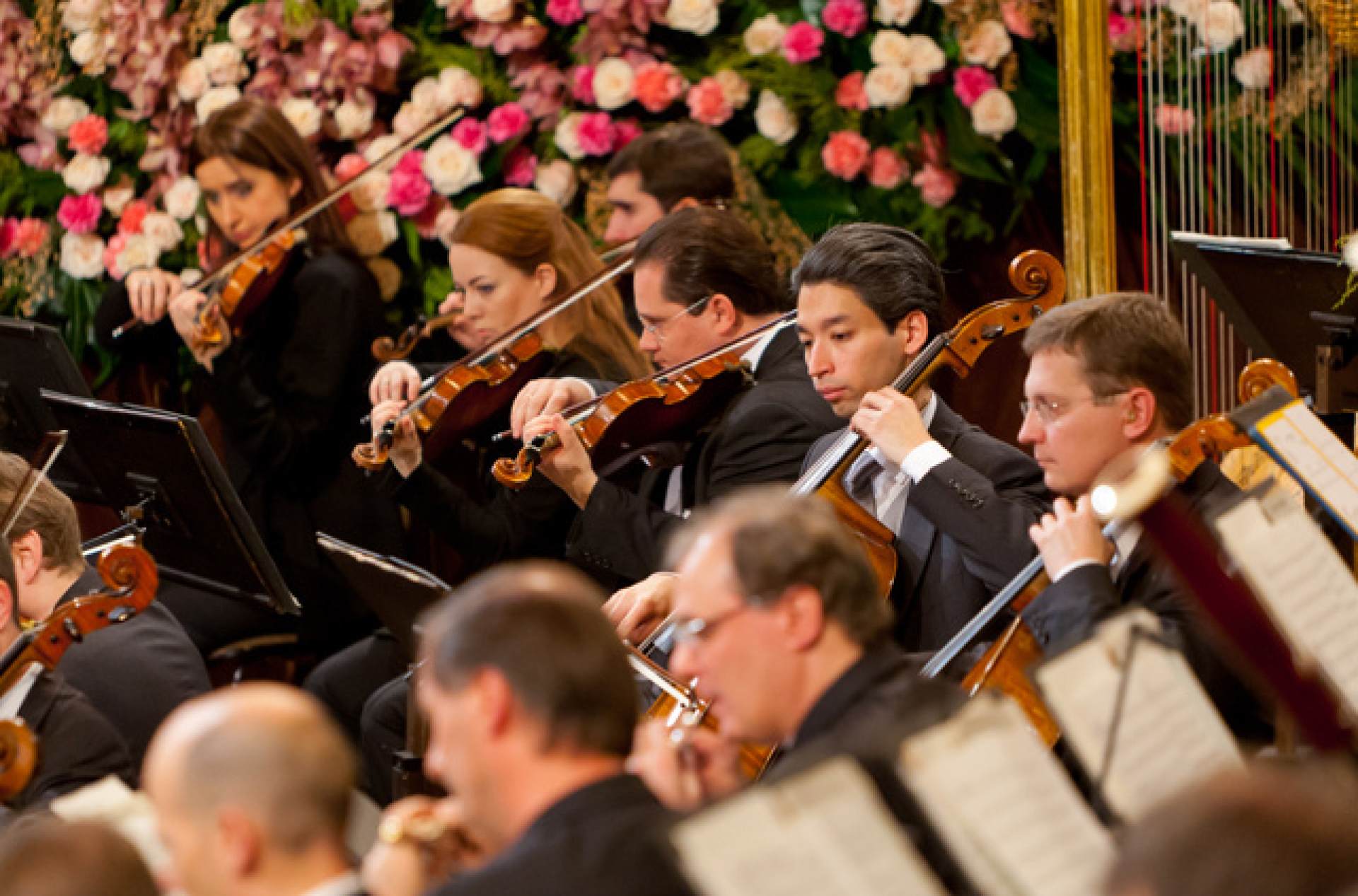
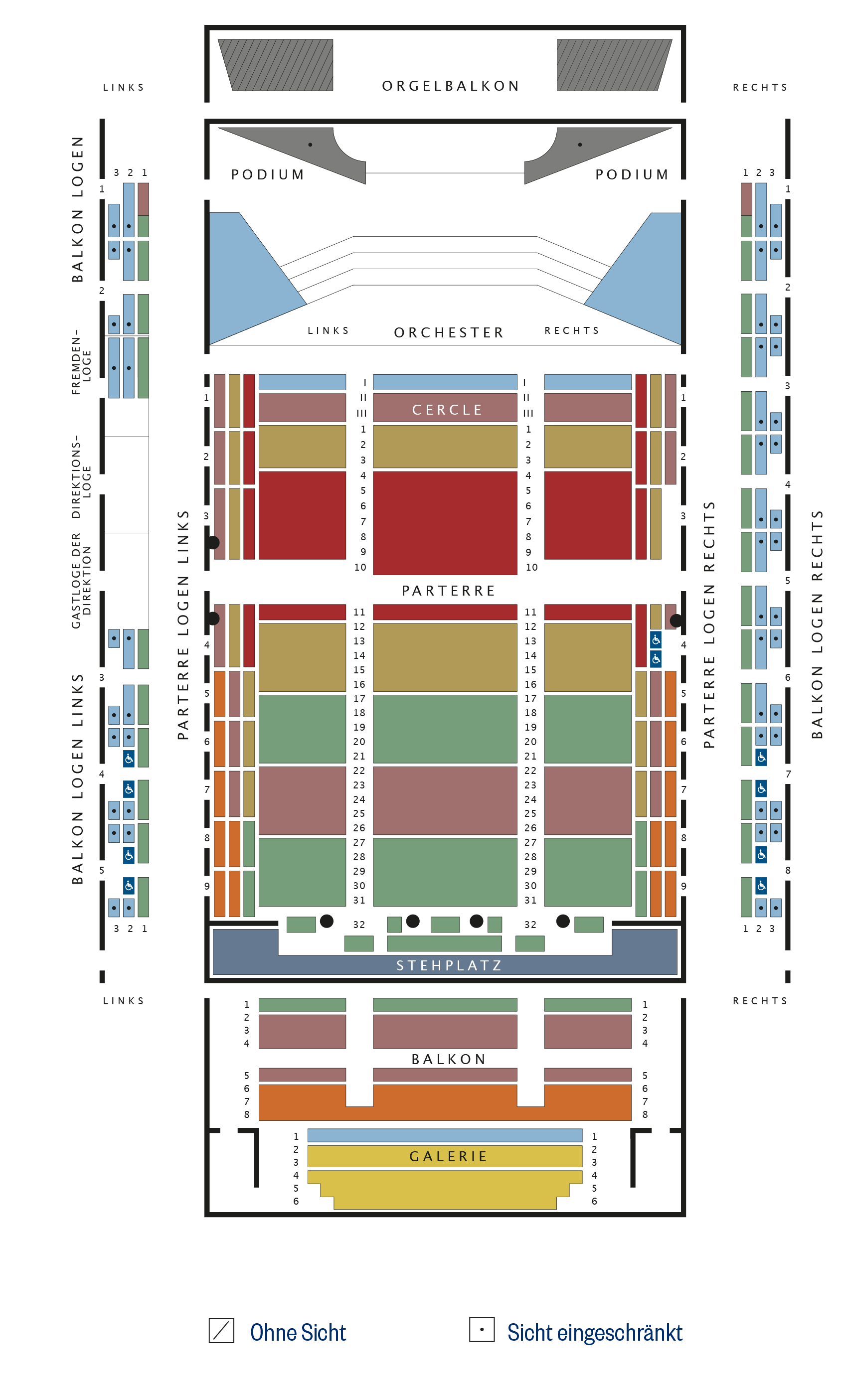
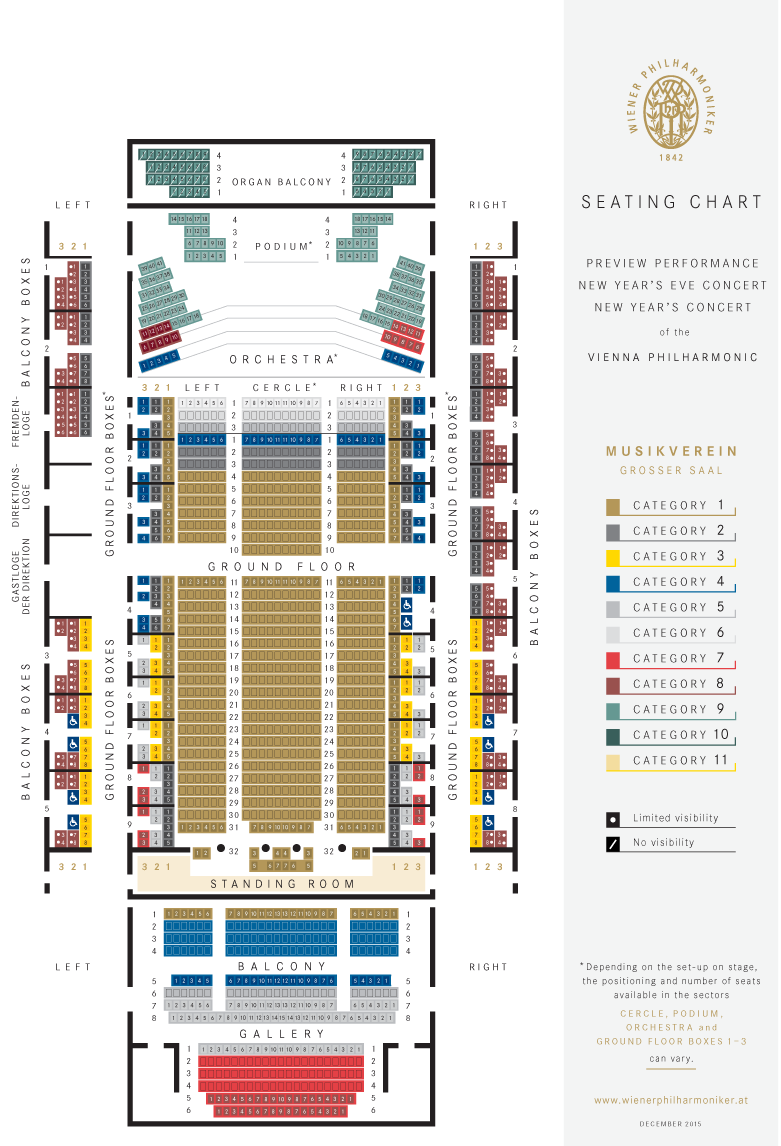
Vienna Philharmonic Orchestra Musikverein Golden Hall
Order tickets
April 2026  | ||||||
|---|---|---|---|---|---|---|
Mo | Tu | We | Th | Fr | Sa | Su |
Program and cast
17th, 18th, and 19th April 2026
Vienna Philharmonic Orchestra
Sir Simon Rattle, Conductor
Program
Gustav Mahler
Symphony No. 9 in D Major
1st, 2nd, and 3rd May 2026
Vienna Philharmonic Orchestra
Andris Nelsons, Conductor
Wiebke Lehmkuhl, Alto
Chor - Vienna Boys' Choir
Chor - Singverein der Gesellschaft der Musikfreunde in Wien, Women's Choir
Program
Gustav Mahler
Symphony No. 3 in D Minor
16th, 17th, 20th, and 21st May 2026
Vienna Philharmonic Orchestra
Riccardo Muti, Conductor
Program
Joseph Haydn
Symphony in B Major, Hob. I:102
Joseph Haydn
Symphony No. 103 in E-flat Major, Hob. I/103 (“Drum Roll”)
Joseph Haydn
Symphony No. 104 in D Major, Hob. I:104, "London"
13th, 14th, and 15th June 2026
Vienna Philharmonic Orchestra
Lorenzo Viotti, Conductor
SUNDAY, 13. SEPTEMBER 2026
INTERPRETERS
Vienna Philharmonic
Tugan Sokhiev, conductor
PROGRAM
Ludwig van Beethoven
Leonoren-Ouverture No. 3, op. 72b
Wolfgang Amadeus Mozart
Symphony in G minor, KV 183
– Break –
Sergei Prokofiev
Romeo and Juliet, op. 64. Ballet Music Suite
End approx. 9:30 PM
FRIDAY, 25. SEPTEMBER 2026
INTERPRETERS
Vienna Philharmonic
Esa-Pekka Salonen, Conductor
PROGRAM
Witold Lutosławski
Symphony No. 4
– Break –
Claude Debussy
La Mer. Three symphonic sketches for orchestras
Jean Sibelius
Symphony No. 5 E-D. 82
End approx. 9:30 PM
SATURDAY, 26. SEPTEMBER 2026
INTERPRETERS
Vienna Philharmonic
Esa-Pekka Salonen, Conductor
PROGRAM
Witold Lutosławski
Symphony No. 4
– Break –
Claude Debussy
La Mer. Three symphonic sketches for orchestras
Jean Sibelius
Symphony No. 5 E-D. 82
End approx. 5:30 PM
SUNDAY, 27. SEPTEMBER 2026
INTERPRETERS
Vienna Philharmonic
Esa-Pekka Salonen, Conductor
PROGRAM
Witold Lutosławski
Symphony No. 4
– Break –
Claude Debussy
La Mer. Three symphonic sketches for orchestras
Jean Sibelius
Symphony No. 5 E-D. 82
End approx. 1:00 PM
MONDAY, 28. SEPTEMBER 2026
INTERPRETERS
Vienna Philharmonic
Esa-Pekka Salonen, Conductor
PROGRAM
Witold Lutosławski
Symphony No. 4
– Break –
Claude Debussy
La Mer. Three symphonic sketches for orchestras
Jean Sibelius
Symphony No. 5 E-D. 82
End approx. 9:30 PM
SATURDAY, 3. OCTOBER 2026
INTERPRETERS
Vienna Philharmonic
Riccardo Muti, conductor
PROGRAM
Anton Bruckner
Symphony No. 8 in C minor
End approx. 5:10 pm
SUNDAY, 4 and 5 OCTOBER 2026
INTERPRETERS
Vienna Philharmonic
Riccardo Muti, conductor
PROGRAM
Anton Bruckner
Symphony No. 8 in C minor
FRIDAY, 9, 10, 11 OCTOBER 2026
INTERPRETERS
Vienna Philharmonic
Riccardo Muti, conductor
Mitsuko Uchida, Piano
PROGRAM
Ludwig van Beethoven
Concerto for Piano and Orchestra No. 4 in G mal, op. 58
– Break –
Johannes Brahms
Symphony No. 2 in D lat, op. 73
FRIDAY, 27, 28, 29 NOVEMBER 2026
INTERPRETERS
Vienna Philharmonic
Alain Altinoglu, conductor
Rudolf Buchbinder, piano
PROGRAM
George Gershwin
Concerto for Piano and Orchestra in F F .m.
– Break –
Henri Dutilleux
Métaboles
Maurice Ravel
Bolero
TUESDAY, 1, 2 DECEMBER 2026
INTERPRETERS
Vienna Philharmonic
Rudolf Buchbinder, Piano and Conductor
PROGRAM
Joseph Haydn
Concerto for Piano and Orchestra in D mal, Hob. XVIII:11
Ludwig van Beethoven
Concerto for Piano and Orchestra No. 3 in C minor, op. 37
– Break –
Robert Schumann
Concerto for Piano and Orchestra in A minor, op. 54
SATURDAY, 12, 13, 14 DECEMBER 2026
INTERPRETERS
Vienna Philharmonic
Singing association of the Society of Music Friends in Vienna
Vienna Singer Boys
Mirga Gražinytė-Tyla, Conductor
Evelina Dobračeva, Soprano
Andrew Staples, Tenor
Christian Gerhaher, Baritone
PROGRAM
Benjamin Britten
Was Requiem, op. 66
SATURDAY, 19, 20, 21 DECEMBER 2026
INTERPRETERS
Vienna Philharmonic
Klaus Mäkelä, conductor
PROGRAM
Claude Debussy
Prelude à l'après-midi d'un fauna. Eglogue pour Orchestre d'après Mallarmé ("The Afternoon of a Faun")
Thomas Adès
"Asyla" for orchestra, op. 17
– Break –
Igor Stravinsky
Le Sacre du printemps. Pictures from pagan Russia, "The Spring Sacrifice"
WEDNESDAY, 13, 14, 16, 17 JANUARY 2027
INTERPRETERS
Vienna Philharmonic
Lahav Shani, conductor and piano
PROGRAM
Sergei Prokofiev
Symphony No. 1 in D mal, op. 25, "Symphony classical"
Dmitry Shostakovych
Concerto for Piano and Orchestra No. 2 in F las, op. 102
– Break –
Peter Ilyich Tchaikovsky
Symphony No. 5 in E minor, op. 64
SATURDAY, 13, 14, 20, 21 FEBRUARY 2027
INTERPRETERS
Vienna Philharmonic
Yannick Nézet-Séguin, conductor
Yuja Wang, Piano
Christiane Karg, Soprano
PROGRAM
Sergei Prokofiev
Concerto for Piano and Orchestra No. 3 in C-mal, op. 26
– Break –
Gustav Mahler
Symphony No. 4 in G-mass
SATURDAY, 20, 21, 26 MARCH 2027
INTERPRETERS
Vienna Philharmonic
Singing association of the Society of Music Friends in Vienna
Franz Welser-Möst, conductor
Golda Schultz, Soprano
Deniz Uzun, Old
Daniel Behle, Tenor
Martin Summer, Bass
PROGRAM
Ludwig van Beethoven
Missa solemnis D-Dur, op. 123
FRIDAY, 16, 17, 18, 23, 24 APRIL 2027
INTERPRETERS
Vienna Philharmonic
Lorenzo Viotti, conductor
Anne-Sophie Mutter, Violin
PROGRAM
Krzysztof Penderecki
Metamorphoses. Concerto for Violin and Orchestra No. 2
– Break –
Erich Wolfgang Korngold
Sinfonietta, op. 5
SATURDAY, 8, 10 MAY 2027
INTERPRETERS
Vienna Philharmonic
Riccardo Muti, conductor
PROGRAM
Joseph Haydn
Symphony in G-Dur, Hob. I:88
Richard Strauss
The citizen as a nobleman. Suite for Orchestra, op. 60
– Break –
Ludwig van Beethoven
Symphony No. 4 B-Dur, Op. 60
FRIDAY, 4,5, 6 JUNE 2027
INTERPRETERS
Vienna Philharmonic
Christian Thielemann, conductor
Sebastian Breit, Oboe
PROGRAM
Richard Strauss
Concerto for oboe and small orchestra in D mal
– Break –
Arnold Schönberg
Pelleas and Melisande. Symphonic poetry, op. 5
SATURDAY, 22 JUNE 2027
INTERPRETERS
Vienna Philharmonic
Herbert Blomstedt, conductor
PROGRAM
Franz Schubert
Symphony No. 7 in B minor, D 759, "UNFINISHED"
– Break –
Anton Bruckner
Symphony No. 7 in E-l.
Photo gallery
©
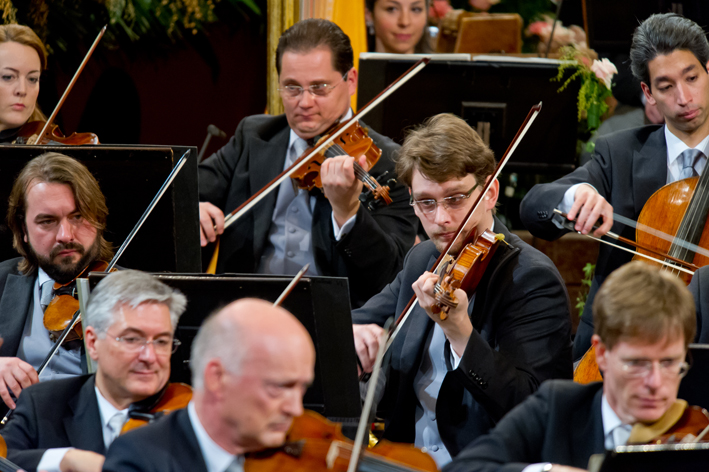
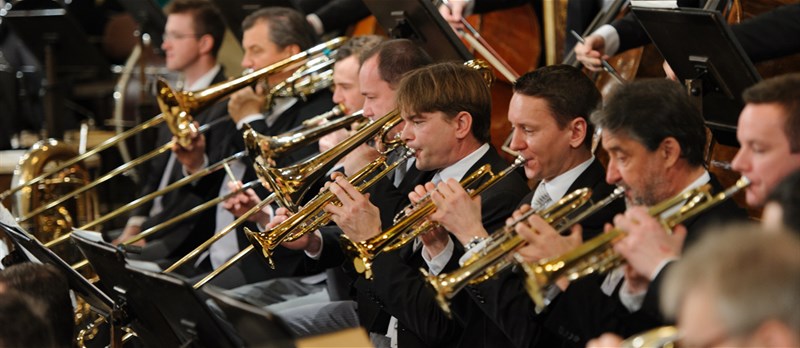
Musikverein Golden Hall
This building is located on Dumbastraße/Bösendorferstraße behind the Hotel Imperial near the Ringstraße boulevard and the Wien River, between Bösendorferstraße and Karlsplatz. However, since Bösendorferstraße is a relatively small street, the building is better known as being between Karlsplatz and Kärntner Ring (part of Ringstraße loop). It was erected as the new concert hall run by the Gesellschaft der Musikfreunde, on a piece of land provided by Emperor Franz Joseph I of Austria in 1863. The plans were designed by Danish architect Theophil Hansen in the Neoclassical style of an ancient Greek temple, including a concert hall as well as a smaller chamber music hall. The building was inaugurated on 6 January, 1870. A major donor was Nikolaus Dumba whose name the Austrian government gave to one of the streets surrounding the Musikverein.
Great Hall - Golden Hall
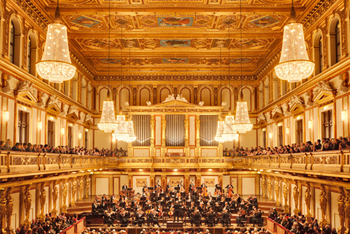 “As high as any expectations could be, they would still be exceeded by the first impression of the hall which displays an architectural beauty and a stylish splendour making it the only one of its kind.” This was the reaction of the press to the opening of the new Musikverein building and the first concert in the Großer Musikvereinssaal on 6 January 1870.
The impression must have been overwhelming – so overwhelming that Vienna’s leading critic, Eduard Hanslick, irritatingly brought up the question of whether this Großer Musikvereinssaal “was not too sparkling and magnificent for a concert hall”. “From all sides spring gold and colours.”
Brahms Hall
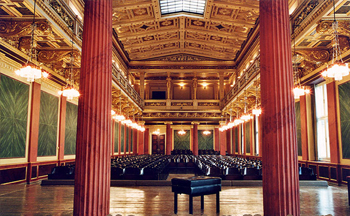 "In order not to promise too much it can be said that it has been made into the most beautiful, most magnificent, perfect example of a chamber concert hall that any of us knows in the world.” This was the reaction of a Vienna daily newspaper in October 1993 as the Brahms-Saal was presented to the public after extensive renovation work.
The surprise was perfect. It was a completely new hall. In contrast to the Grosse Musikvereinssaal, the Brahms-Saal had changed its appearance quite considerably over the years. When and how it acquired that slightly melancholy duskiness that was known to music lovers before 1993 cannot be precisely documented.
Glass Hall
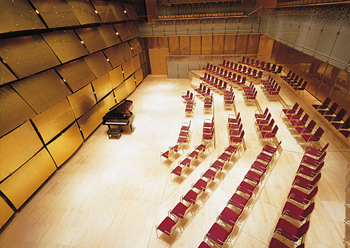 As a venue for events from concerts to luxury banquets, the Glass Hall / Magna Auditorium is not only the largest of the Musikverein's 4 new halls but also the most flexible in terms of usage.
Hub podiums enable the smooth transformation of the concert hall into a conference centre, the cinema into a ballroom, or the stage into a catwalk. State-of-the-art equipment for sound, lighting, video and widescreen digital projection provide the ideal conditions for half-scenic productions.
The Glass Hall / Magna Auditorium was designed by the Viennese architect Wilhelm Holzbauer. With a height of 8 metres, the hall (including the gallery) can play host to up to 380 visitors.


Related events